Freeze and Scale: The Two Clocks Every Cheyenne Water Job Runs On
A Cheyenne water call is usually a clock call. The fast clock is the freeze: a hard night at 6,000 feet splits a line in a garage wall or a crawlspace, and by morning two levels read wet. The slow clock is scale: hard water narrowing drains, furring fittings, and eating a water heater from inside until a seam gives up on an ordinary Tuesday. The two clocks share equipment and almost nothing else. One is a weather event; the other is a maintenance history announcing itself.
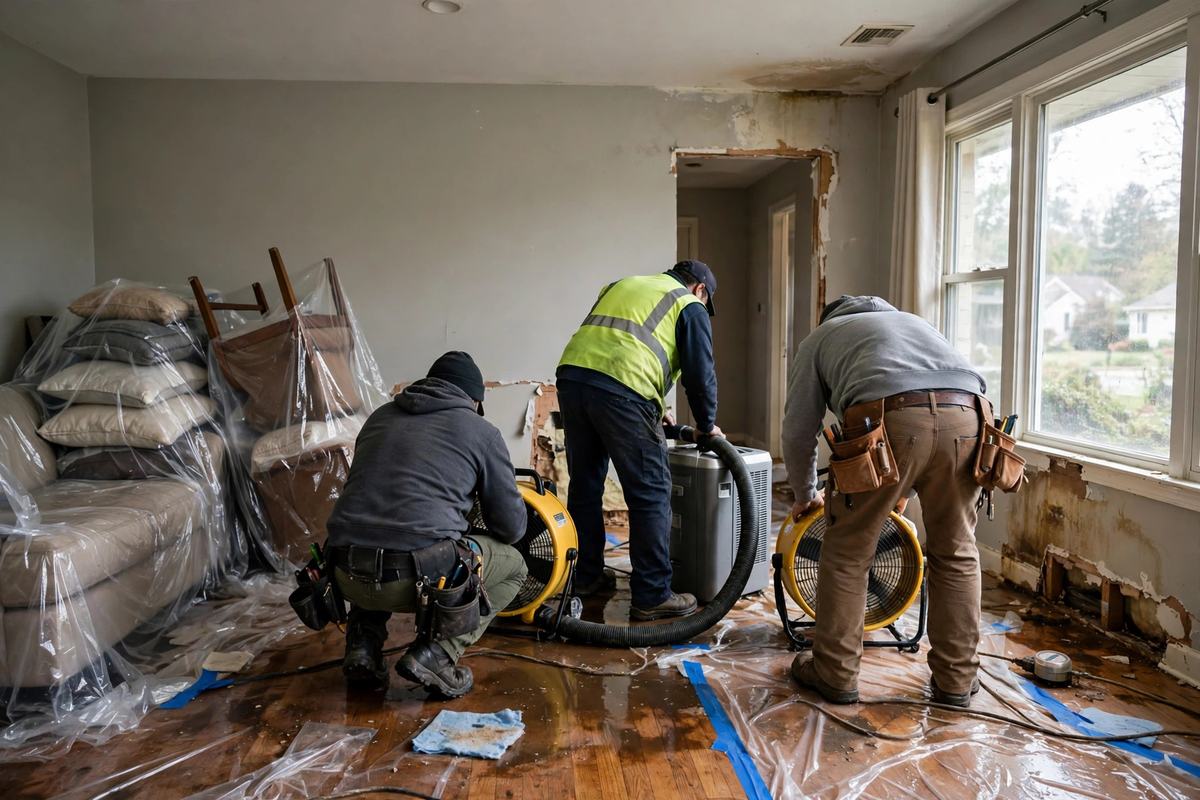
The ground runs a third clock underneath both. Clay and sandy soils cycling through freeze and thaw return moisture to wall bases for days after surfaces read dry, which is why Cheyenne drying is a readings discipline: baseboard and floor edge meters, logged daily, decide when the equipment leaves. A crew that prices the room without reading the floor system has priced the visible half of the job.
The claim follows the same split, so the household habits are clock habits: insulate exposed runs before the season, listen for a rumbling water heater, read the meter in a quiet house twice a year, and ask the water backup endorsement question in a dry month, when the answer can still be changed.
Request a callback
Prefer to talk later? Leave your details and an independent local pro will call you back. No charge to you, no obligation.
Crow Creek Restoration is a free referral service. Submitting this form connects you with independent local contractors who provide the work.